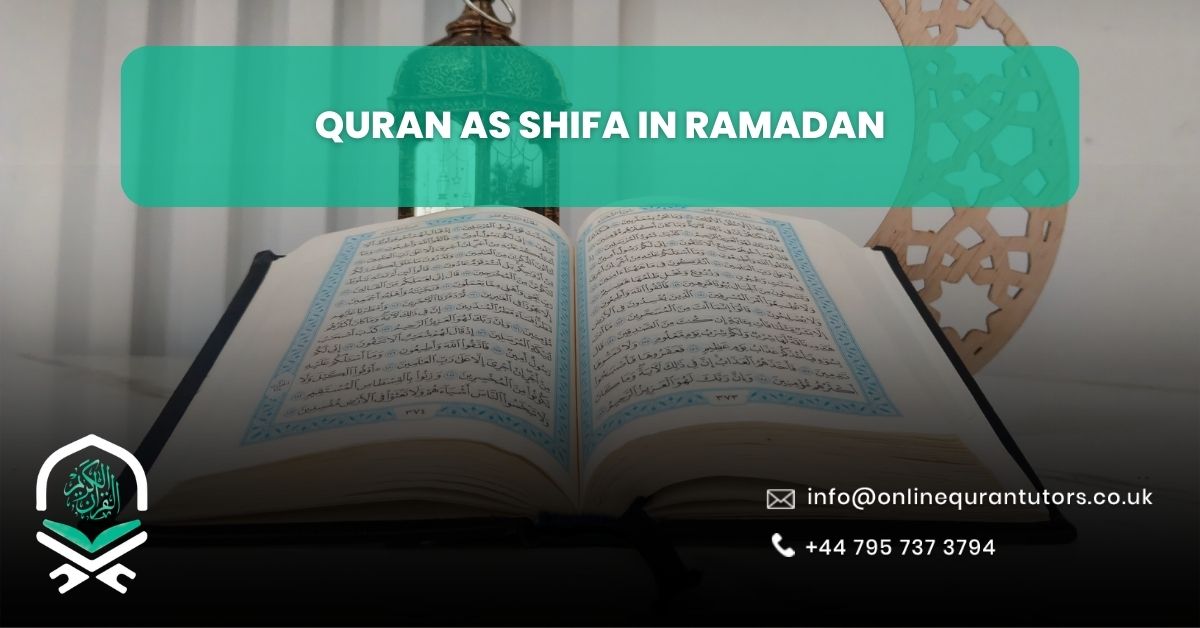
Every year, Ramadan returns as more than a season of fasting. It is a divine invitation — to slow down, to reflect, and to heal. In the rush of daily life, we accumulate invisible wounds: grief, guilt, anxiety, and a quiet sense of spiritual emptiness.
Ramadan creates the stillness we need to face those wounds. And the Qur’an, which Allah revealed in this very month, arrives as the answer. It is shifa — a healing — that speaks directly to the broken places inside us.
This blog explores how the Qur’an functions as a source of spiritual, emotional, and inner healing throughout the blessed month of Ramadan.
What Does “Shifa” Mean in the Qur’an?
Ramadan arrives each year like a gentle knock on the door of the heart. It is not only a month of fasting, but a month of return. A return to stillness. A return to sincerity. Above all, a return to the Qur’an. In a world that exhausts us emotionally and spiritually, the Qur’an comes as shifa — a healing that reaches deeper than words.
Allah describes the Qur’an as a healing and a mercy for the believers. Healing is not limited to physical illness. The heart too becomes tired. It carries disappointments, broken expectations, guilt, anxiety, and silent fears. Ramadan exposes these feelings because hunger softens us and quiet nights make us reflective. In that vulnerability, the Qur’an begins its work.
How the Qur’an Heals the Heart: Reframing Hardship
The healing of the Qur’an is subtle but powerful. It does not always remove pain instantly. Instead, it reframes it. When we read about Prophet Ayyub’s patience, we see that suffering is not abandonment. When we reflect on Prophet Yusuf’s betrayal and eventual honor, we learn that delay is not denial. The Qur’an reminds us that every hardship sits within divine wisdom. This realization alone begins to calm the storms inside us.
The Healing Power of Remembrance and Recitation
Shifa through the Qur’an also comes from remembrance. The heart was created to remember its Lord. When it forgets, it becomes restless. Ramadan increases dhikr and tilawah, and through repetition the heart finds rhythm again. Reciting slowly, even if only a few verses a day, allows the meanings to settle. The Qur’an becomes less of a task to complete and more of a companion to sit with.
The Sacred Bond Between Ramadan and the Qur’an
There is also healing in knowing that the Qur’an itself was revealed in this blessed month. Ramadan is the month in which the Qur’an was sent down as guidance for humanity. This connection makes every recitation feel historically sacred. We are not just reading words. We are participating in a legacy that began on a night better than a thousand months. Our tired voices join centuries of believers who found comfort in the same verses.
The Qur’an Heals Private Wounds Without Shame
Many of us enter Ramadan carrying private wounds. Some are grieving relationships. Some are struggling with self-worth. Some are battling sins they cannot seem to overcome. The Qur’an does not shame the broken. It calls them back with mercy. It reminds the sinner not to despair. It assures the anxious that hearts find tranquility in the remembrance of Allah. These assurances are not motivational slogans. They are divine promises.
Join Online Quran Tutor UK – Start Your Free Trial Today!
Looking to improve your Quran recitation with proper Tajweed? At Online Quran Tutor UK, we offer expertly designed Quran with Tajweed Online Course for learners of all ages. Our qualified instructors make complex Tajweed rules simple and engaging through interactive lessons, practical examples, and easy-to-follow video sessions.
Whether you’re a beginner or looking to refine your recitation, we’re here to support your journey every step of the way.
📘 Courses We Offer:
- Noorani Qaida Course
Learn the basics of Arabic pronunciation and Quranic phonetics. - Online Tajweed Course for Kids
Tailored for young learners with fun, engaging lessons that build strong foundations. - Quran Reading Course
Strengthen your fluency and confidence in reading the Quran accurately and beautifully.
We also offer:
📞 Contact us today to book your free trial class and begin your Quranic journey with expert guidance and flexible learning options!
Conclusion: Let the Qur’an Be Your Healer This Ramadan
Ramadan is one of the greatest gifts Allah has given to the believers — and within it, the Qur’an stands as the greatest treasure. Whether you come to it with a heavy heart, a wandering soul, or simply a longing to feel closer to Allah, the Qur’an meets you exactly where you are.
This Ramadan, do not just recite — reflect. Do not just complete — connect. Let the verses settle into the parts of you that are tired, afraid, or lost. The shifa is real. The mercy is vast. And the door is always open for those who return sincerely.
Frequently Asked Questions (FAQs)
Q1: What does “shifa” mean in Islam?
Shifa (شِفَاء) means healing or cure in Arabic. In an Islamic context, it refers to the Qur’an’s divine ability to heal the heart, soul, and mind. Allah explicitly describes the Qur’an as “shifa lima fi al-sudur” — a healing for what is in the chests (Surah Yunus: 57).
Q2: Which Surah is known as the greatest healing in the Qur’an?
Surah Al-Fatiha is widely regarded as one of the most powerful chapters for healing and is often referred to as “Al-Shafi’ah” (the healer). It is recited in every unit of prayer and holds immense spiritual significance. Surah Al-Baqarah and the Mu’awwidhatayn (Surah Al-Falaq and Al-Nas) are also recognized for their protective and healing qualities.
Q3: How is Ramadan specifically connected to Qur’anic healing?
Ramadan is the month in which the Qur’an was first revealed (Surah Al-Baqarah: 185). The spiritual atmosphere of fasting, night prayers, and increased remembrance makes the heart softer and more receptive to the Qur’an’s message. This unique combination amplifies the healing experience during Ramadan more than at any other time of the year.
Q4: Can the Qur’an heal emotional and mental struggles, not just physical illness?
Absolutely. The Qur’an addresses the full spectrum of human pain — grief, anxiety, guilt, hopelessness, and fear. Verses such as “Verily, with hardship comes ease” (Surah Al-Inshirah: 5-6) and “Surely Allah is with those who are patient” directly speak to emotional suffering. Many believers find profound relief through regular recitation and reflection on its meanings.
Q5: How much Qur’an should I read daily in Ramadan to benefit from its healing?
There is no fixed minimum. Even reciting a few verses daily with focus, intention, and reflection is deeply beneficial. Quality and consistency matter more than quantity. Scholars encourage at least one juz (chapter-portion) per day to complete the Qur’an in the month, but for healing purposes, slow and contemplative reading — even of just one page — can bring immense peace.
Q6: What is the best time to recite the Qur’an for spiritual healing in Ramadan?
The most spiritually charged times are the last third of the night (before Fajr/Suhoor), after Fajr prayer, and between Asr and Maghrib. The time just before iftar, when du’a is especially accepted, is also powerful for combining recitation with heartfelt supplication.