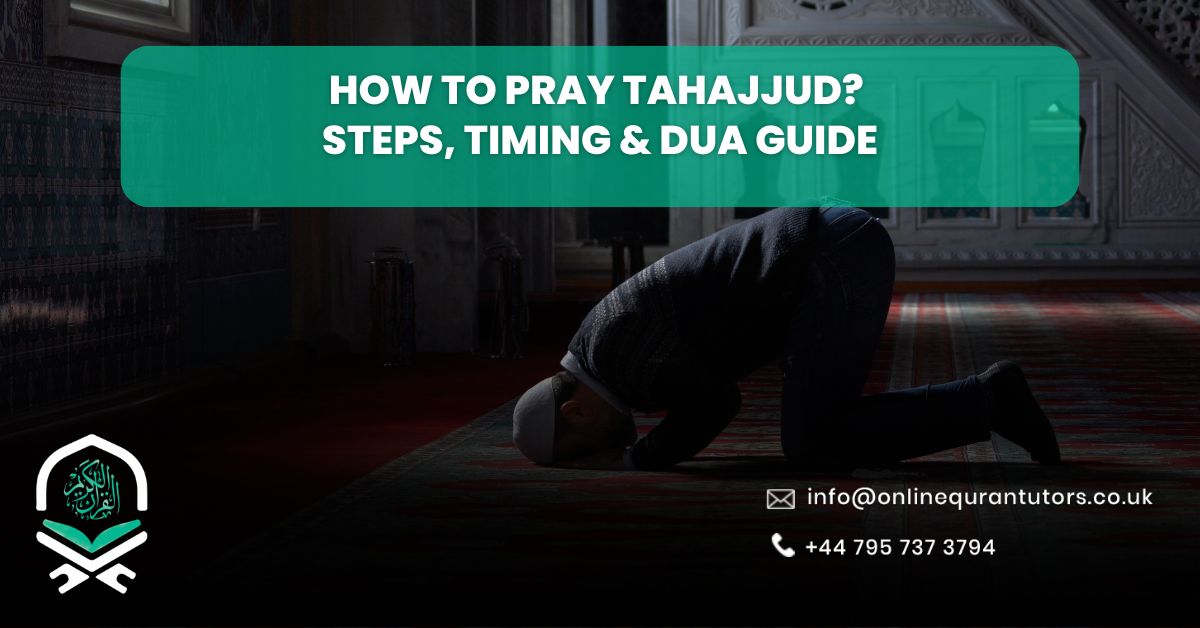
Tahajjud is prayed after midnight in pairs of rakats. Begin with a sincere intention (niyyah), perform ablution (wudu), and prepare a quiet, clean prayer space. In each rakat, recite Surah Al-Fatihah along with any Quranic verses, then complete the bowing (ruku), standing, and prostration (sujood). End your prayer with Tashahhud and Tasleem.
The minimum is two rakats, though you may pray more, and it is recommended to conclude with Witr before Fajr. Tahajjud strengthens your bond with Allah and is one of the most powerful times for sincere dua.
Among the Muslim community, Tahajjud is a recognized sunnah – particularly observed during the blessed month of Ramadan. Yet many Muslims find it difficult to maintain this practice consistently throughout the rest of the year.
Allah said in His Holy Quran:
“And rise at the last part of the night, offering additional prayers, so your Lord may raise you to a station of praise.”
This verse alone reflects how highly Allah values the Tahajjud prayer and the reward He has promised for those who observe it.
It is also worth noting that many Muslims mix up Tahajjud with Qiyam al-Layl, treating them as the same thing.
To clear up this confusion, this article covers everything you need to know – the purpose of Tahajjud, how to perform the night prayer, its spiritual benefits, and the duas best suited for this special time. Read on and discover a deeper level of worship in your daily life.
What Is Tahajjud Prayer?
Tahajjud is a voluntary (nafl) prayer in Islam, performed in the final portion of the night. Muslims offer this prayer to seek forgiveness from Allah and consider it a precious opportunity for repentance and spiritual renewal.
Although it is not obligatory, many devoted Muslims treat Tahajjud as a personal commitment, praying it daily as a means of asking Allah for His mercy and salvation.
The word Tahajjud itself carries a beautiful meaning in Islam. It refers to rising from sleep during the night, sometimes described as “keeping vigil,” reflecting the dedication required to leave the comfort of sleep for the sake of worship.
How Many Rakats In Tahajjud?
The Tahajjud prayer does not have a fixed number of rakats. You can pray anywhere from 2 rakats, which is the minimum, up to 13 rakats including Witr, as was the practice of the Prophet (peace and blessings be upon him).
Also Read: Why UK Muslims Prefer Online Noorani Qaida Over Weekend Masjid Classes?
When To Perform Tahajjud Prayer?
Tahajjud can be prayed at any point during the night after Isha prayer, though some scholars hold that it begins after the first half of the night has passed. However, the most preferred and virtuous time is the last third of the night.
This is based on what the Prophet (peace and blessings be upon him) said: In the last third of every night, Allah descends to the lowest heaven and says: Who is calling Me, so that I may answer him? Who is asking Me, so that I may grant him? Who is seeking forgiveness from Me, so that I may forgive him?
To find the last third of the night, simply divide the time between Isha and Fajr into three equal parts and aim to pray during the final portion.
Tahajjud is performed by repeating pairs of rakats (units of salah), which includes the following steps:
1. Set An Alarm On Tahajjud Time
Set an alarm to wake up after midnight or during the last third of the night. If you happen to miss it or doze off in the middle of your Tahajjud prayer, do not be hard on yourself or feel discouraged.
2. Get Ready For Tahajjud Prayer
Preparing yourself for Tahajjud is an essential part of maintaining this significant act of worship and building a consistent routine. The following steps, once made into a habit, will help you approach this prayer with sincerity and commitment.
- Make Your Intention (Niyyat)
- Do Wudu
- Arrange A Suitable Prayer Space
3. Stand Upright And Face Qibla
Once your prayer space is ready, step onto your prayer rug, face the direction of Mecca, renew your intention, raise your hands to your earlobes, and say “Allahu Akbar.”
4. The First Rakat In Tahajjud Prayer
After the Takbeer, fold your hands over your chest with your right hand placed over your left, then follow the steps below.
Recite Surah Al-Fatiha and another portion of the Quran
Begin the first rakat with your recitation, neither too silent nor too loud, but at a moderate volume in accordance with the Sunnah. The Prophet advised Abu Bakr to raise his voice rather than reciting silently.
Perform Ruku (Bowing)
Say “Allahu Akbar” while raising your hands to your ears, then bow at the waist, place your hands on your knees, and recite the ruku dua three times: “Subhana Rabbiyal Azeem” (Glory to my Lord, the Most Great).
Stand Upright After Bowing
Upon completing the ruku dua, rise to the I’tidal position while raising your hands and saying “Sami Allahu liman hamidah,” followed by “Rabbana Wa Lakal Hamd” in a lower voice.
Do First Sujood (Prostration)
Move into prostration by saying “Allahu Akbar.” Lower your body so that your forehead, nose, and hands all touch the ground, then recite the sujood dua: “Subhana Rabbiyal A’la” (Glory to my Lord, the Most High). Then sit up in the Jalsa position and recite “Rabbighfirli” (Oh Allah, forgive me) three times silently.
Return To Second Sujood
After reciting the Jalsa dua, transition into the second sujood while saying “Allahu Akbar” and repeat everything you performed in the first prostration.
Also Read: Surah Quraish Benefits: Spiritual & Emotional Insights
5. The Second Rakat In Tahajjud Prayer
For the second rakat, rise and follow the same steps as the first. The breakdown is as follows.
Heading To Qiyam (Standing Position)
After rising from the Jalsa position and settling your posture, say “Allahu Akbar,” then recite Surah Al-Fatihah followed by another passage from the Quran. Continue by repeating all remaining steps from Ruku to Sujood, just as performed in the first rakat.
Recite The Final Tashahhud
Once you rise from the second sujood, lift your index finger, point it forward, and recite the final Tashahhud.
Complete With The Tasleem
Place your index finger back on your knee and say “Assalamu alaikum wa rahmatullah” while turning your head to the right, then repeat as you turn to the left. This concludes the Tahajjud prayer.
Tahajjud Prayer Benefits
The time of Tahajjud is when Allah descends to the lowest heaven, drawing closer to His servants. This makes it one of the most precious moments for any Muslim to engage in extended and heartfelt dua.
The points below highlight the key benefits of Tahajjud and what drives so many Muslims to maintain this special act of worship consistently.
1. Deepened Spiritual Connection with Allah
Tahajjud strengthens the believer’s bond with Allah. The stillness and solitude of the night create an environment free from distraction, allowing for pure and focused worship.
2. Spiritual Growth and Development
Regularly performing Tahajjud builds a profound connection with Allah that naturally strengthens your willpower and perseverance over time. The discipline this prayer demands directly shapes your spiritual growth, deepens your faith, and sharpens your dedication.
3. Daily Opportunity For Repentance
Tahajjud is one of the best times to seek forgiveness for your sins and mistakes, no matter how big or small, as highlighted in numerous hadith. It also offers a sacred space for self-reflection, where believers can sincerely ask Allah for guidance on the righteous path.
4. Inner Peace and Serenity
The quiet nature of Tahajjud gives you time to de-stress, reflect, and find comfort in your faith, supporting your overall emotional and spiritual well-being.
5. Fulfillment of Needs and Desires
The tranquility of the night creates the ideal setting for making sincere requests to Allah and seeking His help in fulfilling your personal needs and desires.
Beyond these benefits, numerous hadith emphasize the profound importance of Tahajjud in seeking Allah’s mercy, forgiveness, and guidance.
Can I Pray Tahajjud Without Sleeping?
This is a common question, often asked alongside whether sleep is a requirement for Tahajjud to be valid.
You can perform Tahajjud whether you have slept or not. Sleep is not a condition for the prayer to count. It is simply recommended because resting beforehand helps you stay focused during the prayer and prevents unnecessary strain on your body.
Also Read: How Online Quran Classes Build Islamic Values in Kids?
Is Tahajjud Prayer Always Accepted?
There is no guarantee that every dua made during Tahajjud will be accepted, as acceptance ultimately rests with Allah’s will and wisdom.
Be grateful that you are turning to Allah for support and guidance in both your spiritual and worldly matters. At the same time, it is important to remember that Allah’s plan may not always align with our own desires or expectations, and some duas may not be answered in the way we hope.
What matters most is placing your trust in Allah’s wisdom and having complete faith that He will provide for all of your needs in the way that is best for you.
Join Online Quran Tutor UK – Start Your Free Trial Today!
Looking to improve your Quran recitation with proper Tajweed? At Online Quran Tutor UK, we offer expertly designed Quran with Tajweed Online Course for learners of all ages. Our qualified instructors make complex Tajweed rules simple and engaging through interactive lessons, practical examples, and easy-to-follow video sessions.
Whether you’re a beginner or looking to refine your recitation, we’re here to support your journey every step of the way.
📘 Courses We Offer:
- Noorani Qaida Course
Learn the basics of Arabic pronunciation and Quranic phonetics. - Online Tajweed Course for Kids
Tailored for young learners with fun, engaging lessons that build strong foundations. - Quran Reading Course
Strengthen your fluency and confidence in reading the Quran accurately and beautifully.
We also offer:
📞 Contact us today to book your free trial class and begin your Quranic journey with expert guidance and flexible learning options!
Conclusion
Tahajjud is a voluntary night prayer performed in the final portion of the night. It holds a special place in Islam as a deeply valued act of worship, offering believers a meaningful opportunity for repentance and seeking forgiveness from Allah.
There is no fixed number of rakats, with the prayer ranging anywhere from 2 to 13. The most recommended time to perform it is during the last third of the night. The prayer begins with a sincere intention, followed by ablution, finding a peaceful space, and completing the steps of Salah, concluding with Tasleem. Additional rakats may be added as desired.
Through Tahajjud, believers can experience spiritual growth, genuine repentance, inner peace, and the hope of having their personal needs fulfilled.
Duas made during Tahajjud carry special weight, though their acceptance remains in Allah’s hands. It is best to approach this prayer with full sincerity and dedication, understanding it as a gift that Allah has extended to His believers.
Ultimately, Allah has not made Tahajjud an obligation. He has offered it as a gift, and it is one that every Muslim should embrace and cherish wholeheartedly.